With decarbonisation targets approaching for HGVs, battery technology is fast becoming the defining factor, with advances in energy density, charging speeds and pack design improving range. Stephen Gifford and John-Joseph Marie from the Faraday Institution explore the progress to date and what still needs to happen
The HGV sector is a significant part of the UK’s economy, supporting thousands of jobs and contributing substantially to the logistics industry. However, it is also a major source of emissions, accounting for 16 per cent of carbon emissions in the transport sector. As such, the HGV industry is transitioning towards using new fuels and technologies, with battery electric HGVs, hydrogen fuel cell electric vehicles (FCEVs) and hydrogen-ICE (internal combustion engines) emerging as alternatives to traditional diesel engines.
Battery-electric HGVs are the most popular technology today for zero-emission HGVs, drawing on the advancements in battery technology deployed in passenger EVs, with their market share expected to continue to grow towards 2050.
Battery-electric HGVs
Battery electric HGVs demonstrate higher energy efficiency and lower operational costs, making them particularly competitive in applications with predictable routes and frequent stops, such as urban deliveries.
The IEA projects that as technology and infrastructure continue to develop, battery electric HGVs could account for around 20 per cent of European road transport electricity demand by 2030 and capture the largest share of new sales from around 2035.
However, the current limitations in battery energy density and range, particularly under heavy loads, remain significant challenges, underscoring the need for robust recharging infrastructure at operator depots and en-route hubs to enable widespread adoption.
Operational costs
Battery electric HGVs are widely projected to achieve lower total cost of ownership (TCO) than diesel trucks in the near future. Despite their higher upfront cost and additional infrastructure cost, battery electric HGVs benefit from significant fuel and maintenance cost savings, demonstrating the potential for battery electric HGVs to offer lower TCOs across a range of use cases. More recently, the Department for Transport projected that TCO parity will be achieved for small rigid battery electric HGVs in the mid-to-late 2020s and for the largest articulated HGVs in the first half of the 2030s.
In addition to TCO parity, up-front cost parity is also expected to be achieved soon, driven by falling battery prices, simpler propulsion systems and the economies of scale shared with the passenger electric vehicle market.
Improving battery performance
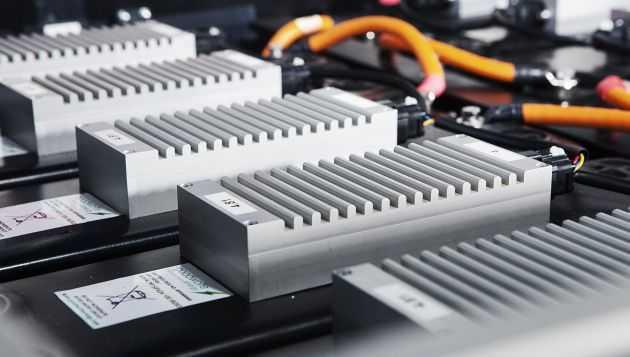
The battery pack size and energy density of an electric HGV will have a significant impact on vehicle range and payload size. Increased battery weight typically reduces the payload capacity to 80 per cent of that of diesel trucks, with range also being affected.
Recent advances in the energy density of lithium-ion batteries have significantly improved the range and operational viability of electric HGVs. In addition, pack design improvements from the automotive sector, including larger format cells and innovative strategies such as cell-to-pack, have contributed to significant performance gains that will benefit electric HGVs. A move from 400V to 800V pack architectures could also help reduce charging times by up to 50 per cent.
Next-generation battery technologies with higher energy densities (including solid-state batteries, silicon anodes, and lithium metal anodes) could help meet the demands of long range and high payloads for HGVs. Such advances will support heavier loads and long-haul operations by reducing pack sizes, as existing performance levels remain insufficient. However, these technologies will need to demonstrate higher energy densities and remain cost effective to ensure they do not negatively impact vehicle TCO.
Charging infrastructure
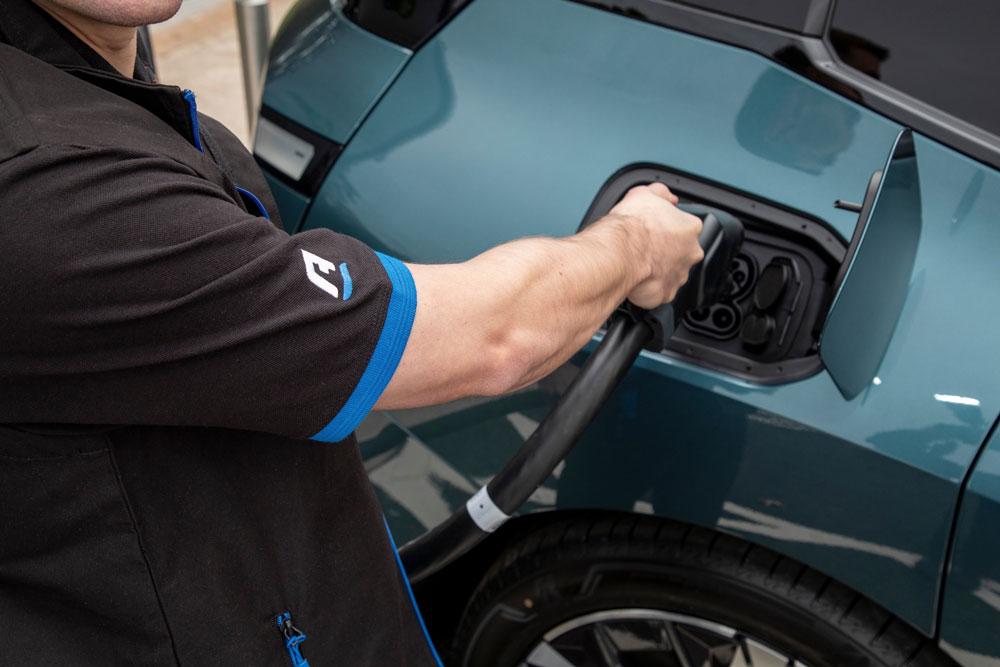
Recharging times for electric HGVs are much longer than diesel refuelling, introducing a key operational constraint for freight businesses unless fast and reliable charging infrastructure is available.
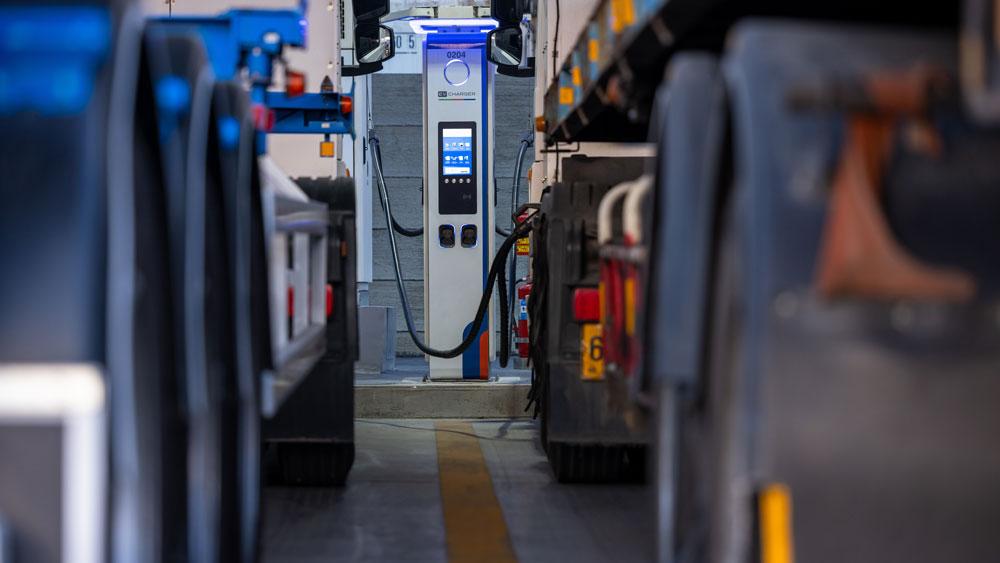
Depot-based charging will be a key strategy for battery HGVs, with 93 per cent of chargers anticipated to be depot-based. This allows vehicles to charge overnight or fast-charge during the day. Depot-based business models are also well-suited to early electrification, servicing consistent and shorter routes. Depot deployment will face challenges due to required grid reinforcement, highlighting the need for a streamlined and consistent national framework to accelerate progress. Such challenges can be mitigated by deploying on site battery energy storage systems (BESS), a solution which companies such as Enough Energy are developing.
Battery swapping at depots is emerging as a practical solution to enhance operational efficiency, reduce downtime and lower ownership costs. Already widely used in micromobility markets, it has become prominent in China: nearly half of the 30,000 electric HGVs sold in 2023 were classified as battery-swappable models. Battery swapping enables rapid refuelling, optimised charging schedules and the separation of vehicle and battery expenses.
While depot-based charging will serve most battery-electric HGVs, a public network is essential to help support long-haul operations.
High-powered chargers, for example 350 kW near warehouses and 1 MW at motorways, will enable efficient top-ups during breaks. In practice, most HGV movements are concentrated along key UK freight corridors, with modelling indicating that up to 80 per cent of public truck charging demand could be met by around 50 strategically located sites.
However, it is important to note that in practice, electrified HGV fleets in Europe tend to be sized for the most demanding days of operation, meaning that battery packs are often underutilised. The average depth of discharge from the trucks involved in the study was only 44 per cent. This should be taken into account when assessing the potential viability of electrifying a particular route.
Future developments
Battery electric HGVs are gaining in popularity, driven by cost reductions and efficiency improvements. The sharp decline in battery costs has already positioned electric HGVs as the most cost-effective alternative option to diesel in many applications when considering TCO, particularly in urban and short-haul duty cycles.
To support the transition to battery electric HGVs the following actions are recommended. Firstly, invest in the development of next-generation battery technologies and promote the UK production of HGV-specific battery systems, particularly high-capacity packs for long-haul vehicles.
We must upgrade and expand HGV-specific UK charging infrastructure, particularly strategically located public charging points and depot-based solutions.
We must invest in grid capacity upgrades to ensure the charging network meets the demands of an electric HGV fleet as well as integrate renewable energy sources into charging infrastructure to reduce reliance on the grid and lower energy costs.
We must also strengthen collaboration among energy providers, policymakers and industry stakeholders to address technical and logistical challenges.
A number of government programmes, such as the Zero-Emission HGV and Infrastructure Demonstrator and the Depot Charging Scheme, are helping to address these challenges by supporting early uptake of battery electric HGVs alongside depot-based and public charging infrastructure. Market uptake is also supported through capital grants (such as the plug-in truck grant ) and initiatives from devolved administrations.