
The original iteration of the Corsa Electric introduced the idea of Vauxhall’s EV passenger car models on its arrival in 2020. Richard Gooding discovers that the recently refreshed version offers more technology, more power, and a longer range.
What is it?
Originally known as the Corsa-e, the all-electric version of Vauxhall’s popular small car is based on Stellantis’ ‘e-Common Modular Platform (e-CMP) which underpins other models from the group. The small EV underwent a refresh for 2023, adding a long range 51kWh battery option alongside the existing 50kWh choice. Vauxhall was named the GreenFleet 2023 Electric Vehicle Manufacturer of the Year at the GreenFleet Awards, and it was this car that laid the foundation for its other EVs.
What range does it have?
Unlike its predecessor, the refreshed Vauxhall Corsa Electric comes with a choice of two batteries. Both lithium-ion units, the entry level 50kWh battery is the same as before, and can officially travel up to 221 miles on a single charge on the WLTP combined test cycle. The larger 51kWh battery – that comes with a more powerful electric motor – officially manages up to 248 miles under the same testing protocols.
How long does it take to charge?
Plug the Corsa Electric into a 7kW home wallbox and a flat to full recharge will take just under eight hours. An 11kW AC chargepoint will refill the battery in the same state of charge increments in just over five hours, while a 100kW DC rapid charger connection takes around 30 minutes to fill either battery from 0-80 per cent. Vauxhall’s supermini EV has a standard on-board 11kW AC charger.
How does it drive?
One of the Corsa Electric’s trump cards is that it doesn’t immediately look different to its ICE-powered siblings. Its appearance is similar to the outgoing model but Vauxhall’s new ‘Vizor’ grille makes it a lot smarter. Inside, there’s a more traditional feel, too, but that is a key part of this car’s appeal. There are physical buttons for the air conditioning, and the 10-inch colour touchscreen is sharp and angled towards the driver for ease of use. Quality is equal to others in the class, but there are some plastics that feel wanting for the price.
On the move, the Corsa Electric is quiet, with only road noise being audible. It feels agile and quite spirited through corners, with responsive handling, and a sense of the weight (in relation to the battery) being low down in the car. Accurate steering enables you to place the Corsa Electric easily on the road, and a good overall level of damping – though it can sometimes err on the firm side – helps to make it fun to drive, but comfortable, too.
Three driving modes – Normal, Eco and Sport – allow tailoring of the driving experience, with Eco limiting the power to around 80bhp, and switching off all unnecessary energy-consuming features to help eke out available range. A stronger regenerative braking ‘B’ setting also increases the level of force when the car is decelerating, feeding more energy back into the battery.
What does it cost?
Priced from £32,445, the entry level Design trim offers 16-inch alloy wheels, a 10-inch colour touchscreen with smartphone mirroring, cruise control, keyless start, rear parking sensors, headlight high beam assist as well as lane departure and speed sign recognition systems. The Corsa Electric Yes is a limited edition model, and adds a black exterior styling pack and a unique ‘Record Red’ colour, yet from £26,895, is the cheapest version of Vauxhall’s small EV.
The GS trim begins at £34,080, and includes features such as 17-inch alloy wheels, front and rear parking sensors, LED headlights, a black roof and dark-tinted rear windows, climate control, navigation, a panoramic rear view camera, a smartphone wireless charging pad, and sports seats. The top-specification Ultimate (as tested here fitted with the 51kWh battery) is priced from £37,190 with highlights including LED Matrix headlights and LED tail lights, adaptive cruise control, a seven-inch digital driver’s display, alcantara seat trim, driver seat massage function, heated front seats and steering wheel and a blind spot alert system.
The Corsa Electric Design and Yes are only available with the smaller 50kWh battery, while the GS has the option of both this and the 51kWh unit. The Ultimate only comes with the 51kWh battery.
How much does it cost to tax?
Similarly to all electric vehicles currently on sale in the UK, the Vauxhall Corsa Electric is currently exempt from VED charges in both its first and subsequent years of registration. For the 2024-2025 tax year, it has a Benefit In Kind (BIK) value of two per cent.
Why does my fleet need one?
Shunning the trendy or glitzy feel of certain other EVs, being a sensible small electric car has done the Corsa Electric a lot of favours. Just as before, it remains a wholly resolved small EV, with good on-road manners, and an easygoing, easy-to-use nature. For those fleet drivers who favour little fuss with clear get-in-and-go capability, the Corsa Electric is still a compelling choice.
BrowserPreview_tmp%20%2821%29_0.gif
What is it?
The first dedicated electric vehicle to be underpinned by the Hyundai Motor Group’s – parent of Kia – E-GMP (Electric Global Modular Platform) which introduces 800V charging technology, the EV6 reset many driver’s expectations of what a Kia EV is.
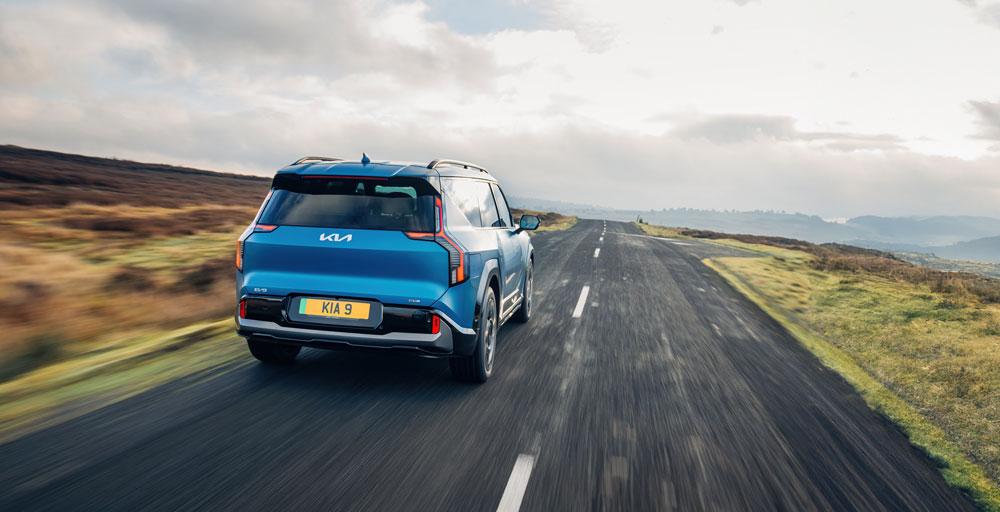
A six or seven-seat SUV elevating the South Korean brand into luxury vehicle price and market territories, the EV9 does that to even more dramatic effect.
What range does it have?
All versions of the Kia EV9 are fitted with a 99.8kWh li-ion polymer battery. This gives the entry level Air specification model a range of up to 349 miles on the combined WLTP driving cycle, while the mid-spec GT-Line and top GT-Line S models can officially travel up to 313 miles on a single charge. Every EV9 also comes with a heat pump to eke out range.
How long does it take to charge?
Compatible with both 400V and 800V charging infrastructure, with a charging speed up to 210kW, the Kia EV9 can be recharged from 10-80 per cent in around 25 minutes when connected to an ultra fast charger. A 50kW DC chargepoint will fill the same percentage of the battery in just under 90 minutes, and connect the big SUV to a 7.4kW home wallbox, and a flat to full refill takes a little over 14 hours.
How does it drive?
The EV9’s size makes a statement on its own, the car’s sharp-edged and futuristic ‘Opposites United’ design ethos detailing adding to the imposing appearance. It can’t be mistaken for anything else, and while introverts may stay away, Kia has to be applauded for making family EV transport this daring. Inside, there’s a minimalist feel, with two 12.3-inch digital screens sandwiching a 5.3-inch climate control display.
The graphics are sharp and with a row of shortcut haptic buttons ‘etched’ into the dashboard below the screens, usability is given a helping hand. Materials feel as premium as rivals at this elevated price point, and sustainability is a selling point, with a big use of recycled plastics such as PET from post-consumer waste.
A wheelbase of 3,100mm gives lots of room for everyone, and two USB-C ports in every seat row means every device should be catered for, too. For such a big machine, the EV9 is incredibly refined on the move with hushed levels of wind and road noise.
Performance from the 380bhp GT-Line S with all-wheel drive is brisk rather than outright quick, but the car hides its bulk well, with the pace suitably quickened in ‘Sport’ mode, one of four available driving modes. The steering has heft with little feel, but is not artificially light. The car handles tidily and disguises its dimensions very well, although you are reminded of its size in more crowded urban streets.
The ride is also very comfortable, as it should be for a family car. Regeneration is done by steering wheel-mounted paddles, which remains the best way to manage this function.
What does it cost?
Entering a new market and price sector, the EV9 sets out a stall almost as bold as its looks. The EV9 Air costs from £65,025 and is rear-wheel drive only. Equipment includes 19-inch alloy wheels, auto flush exterior door handles, auto lights and wipers, LED headlights, heated, ventilated and powered front seats, rear privacy glass, a heated steering wheel, and three-zone climate control.
The GT-Line is priced from £73,275 and you’ll gain 21-inch alloy wheels, GT-Line exterior styling pack, adaptive LED headlights, alloy pedals, and a driver’s power adjustable memory seat with power adjustable front passenger seat. Starting at £76,025, the GT-Line S adds the option of six seats (with a choice of swivel seats in the second row), a head-up display, a tilt and slide sunroof, and a 14-speaker Meridian premium sound system.
How much does it cost to tax?
All Kia EV9 models are currently exempt from VED charges in their first and subsequent years of registration. The large South Korean EV SUV has a two per cent 2024-2025 Benefit In Kind (BIK) value.
Why does my fleet need one?
A flagship model with upmarket aspirations, the EV9 is a bold statement of intent. As a family car, it works well, its more than ample space and versatility key attributes that Kia has pleasingly recognised.
High levels of finish and on-board technology are appealing and although the looks may be challenging for some drivers, the car is refreshingly different from its more established and luxury-branded rivals. And for those, that should be a genuine worry.