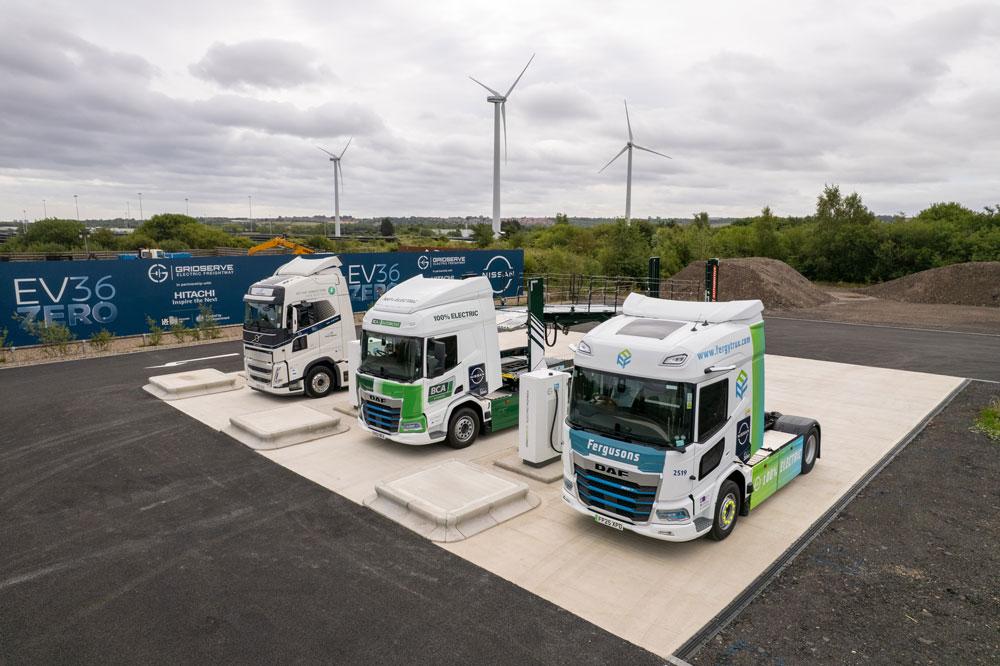
The first annual report for the Zero Emission HGV and Infrastructure Demonstrator (ZEHID) programme highlights progress in deploying electric HGVs across the UK, with more than 240 trucks and 40 charging sites established. However, high vehicle costs, payload constraints and grid connection delays remain barriers. We examine the report
The first annual report from the ZEHID programme highlights progress in deploying zero-emission HGVs across the UK, while identifying the cost, payload and infrastructure challenges that must be overcome to for zero-emission freight to become viable for the masses.
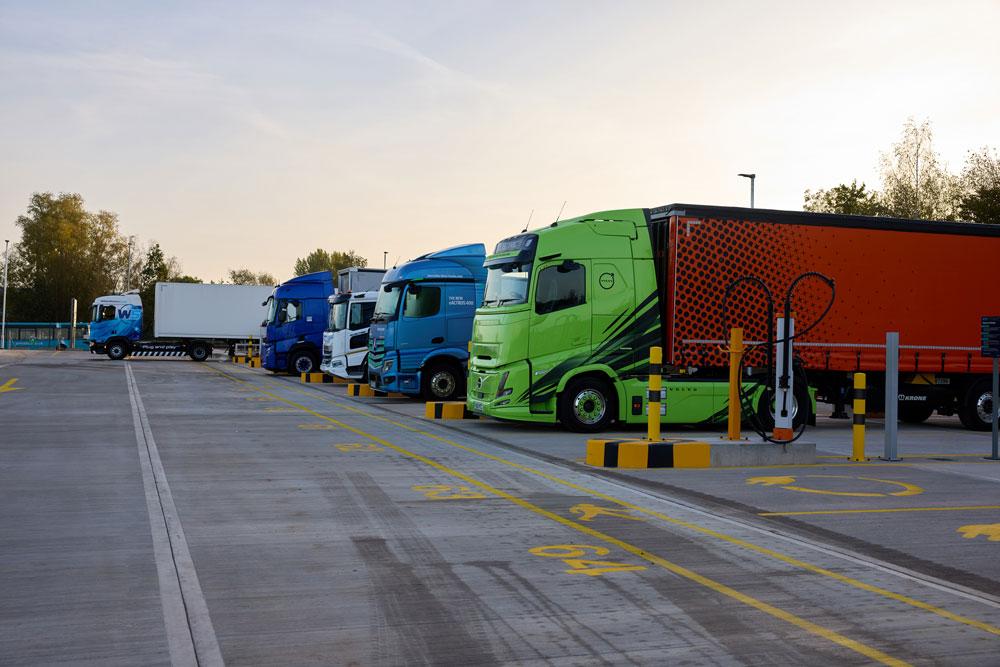
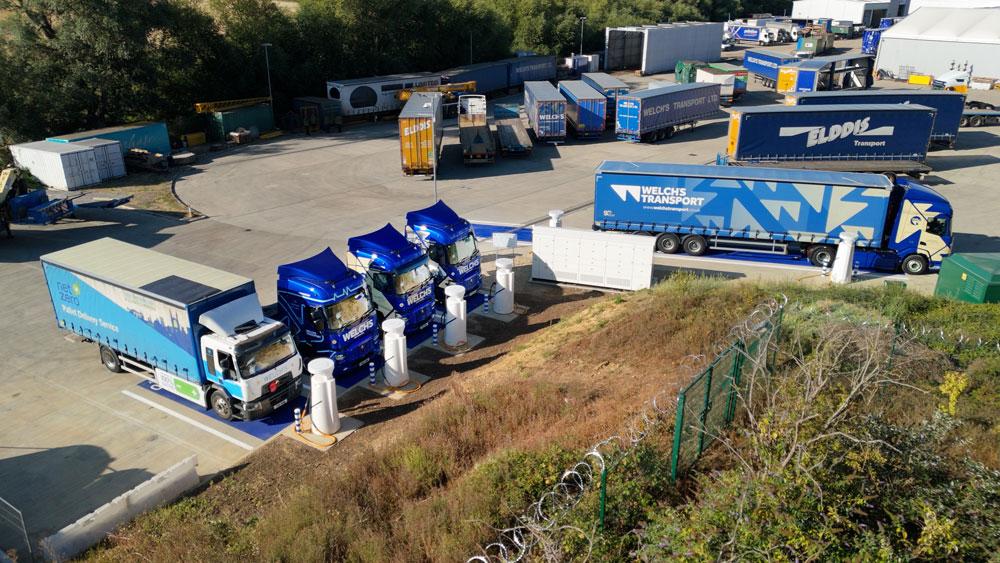
The UK’s Zero Emission HGV and Infrastructure Demonstrator (ZEHID) programme has deployed more than 240 zero-emission trucks and established over 40 charging sites, marking significant progress in the transition to cleaner road freight.
However, its first annual report highlights ongoing challenges around vehicle costs, payload capacity, grid connections and the infrastructure needed to support widespread adoption.
Funded by the Department for Transport (DfT) with approximately £150 million and delivered through Innovate UK, ZEHID was established in 2022 to put battery electric and hydrogen-powered trucks to work across real-world freight operations. The evidence generated from the programme will then support future industry investment, infrastructure planning and policymaking.
Its three active projects – Electric Freightway, eFreight 2030 and ZENFreight – are testing battery-electric and hydrogen-powered vehicles in real-world freight operations, generating evidence to inform future investment and policy decisions.
By the end of 2026, the programme expects to have around 300 zero-emission trucks in operation and 70 infrastructure sites established across the UK.
Real-world performance
The battery-electric HGVs weighing up to 44 tonne vehicles, supplied by six manufacturers, are being used by 35 operators across multiple sectors and applications.
Early results indicate that the vehicles are already operating successfully on commercial routes across the country. Monitoring has recorded more than 85,000 trips, 2.2 million miles travelled and over 550,000 tonnes of freight moved.
The programme estimates that these operations have delivered an 81 per cent reduction in greenhouse gas emissions compared with equivalent diesel operations, saving more than 4,000 tonnes of CO2 to date.
Most operators report minimal disruption to their day-to-day operations, with vehicles carrying payloads of up to around 25 tonnes.
The findings provide encouraging evidence that zero-emission HGVs can meet the requirements of many commercial freight operations. However, the report makes clear that performance and commercial viability vary according to vehicle type, route length, payload and operating conditions.
Claire Spooner, director of the Innovation Service at Innovate UK, said: “This report provides valuable insight into what is working, where challenges remain and what will be needed to support the wider transition to zero-emission freight.”
Building the charging network
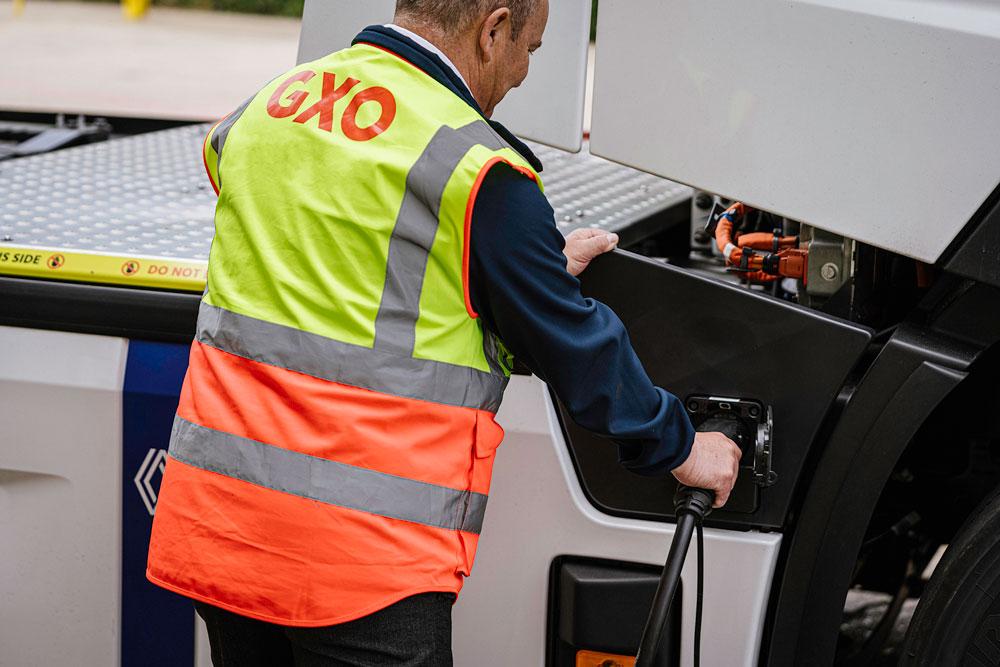
Alongside vehicle deployment, ZEHID is helping to establish the charging infrastructure needed to support electric freight. More than 40 ZEHID-funded charging sites had been commissioned by July 2026, spanning depots, shared facilities, public locations and customer sites.
The infrastructure ranges from 43kW chargepoints to facilities offering up to 5MW of ultra-rapid charging, reflecting the different requirements of commercial fleets.
However, grid connections remain a significant barrier. The report highlights considerable variation in connection costs and timescales between sites. One potential eFreight 2030 location was quoted a connection time of five years, prompting the project to redirect development efforts towards sites better suited to its demonstration timetable.
For fleet managers, this reinforces the need to assess depot capacity, charging requirements and future vehicle demand together, rather than treating vehicle procurement and infrastructure installation as separate decisions.
The challenge of long-distance freight
Although early results demonstrate the potential of electric HGVs, the report identifies long-distance and heavy-duty applications as more difficult to decarbonise.
During the early deployment phase, electric HGVs typically travelled around 840 miles per week, compared with approximately 1,615 miles for a sample of diesel trucks. Nevertheless, some electric vehicles have demonstrated long-distance capability, covering up to 500 miles in a day or 2,485 miles in a week.
The report identifies larger battery requirements, reliance on en-route charging and higher charging costs as factors slowing progress towards total cost of ownership (TCO) parity for vehicles travelling more than 250 miles per day or operating at 40 tonnes and above.
Payload capacity is another consideration. Electric HGVs are typically around 3.5 tonnes heavier than equivalent diesel vehicles when unladen. Depending on vehicle configuration, this can reduce payload by approximately 1.5 tonnes for a 42-tonne 4x2 vehicle and up to 3.5 tonnes for a 6x2.
For operators transporting heavy goods, these restrictions can affect productivity and the economics of switching to electric vehicles. The report notes that some hauliers are therefore prioritising lighter loads and shorter routes.
The issue is particularly significant because long-haul and heavy-duty vehicles account for a disproportionate share of road freight emissions. Analysis by the Energy Systems Catapult cited in the report suggests these applications generate around 45 per cent of emissions despite representing approximately 12 per cent of the fleet.
Progress in these segments will therefore be important to achieving wider emissions reductions across the sector.
Making the business case
The financial case for zero-emission HGVs remains highly dependent on the circumstances of individual operators.
According to Electric Freightway analysis cited in the report, some specific use cases could deliver lifetime savings of £60,000 to £120,000 per vehicle over eight years when current grants are included. However, a substantial TCO gap remains in most cases.
Upfront vehicle costs account for an estimated 45 per cent to 85 per cent of total cost of ownership before grants, making the initial investment a major consideration.
Other factors include vehicle utilisation, electricity and hydrogen prices, the balance between depot and public charging, and how infrastructure investment is financed and spread over time.
Smaller operators may face additional difficulties because they have less access to capital and fewer opportunities to absorb financial risk or commit to long-term infrastructure investment.
People and processes matter
ZEHID also highlights the organisational changes involved in moving to zero-emission freight. Electrification affects more than vehicles, requiring coordination across fleet operations, logistics, procurement, maintenance and depot management.
Drivers’ experiences have generally been positive, with even initially sceptical drivers adapting quickly and reporting benefits such as smoother acceleration and reduced noise and vibration.
However, electric HGVs introduce new operational requirements. Operators must actively manage the relationship between electricity supply and vehicle demand across sites, routes and charging schedules.
This means successful deployment depends on developing the skills and processes needed to integrate new vehicles into existing operations, alongside investment in technology and infrastructure.
Evidence to support the next phase
The first annual report marks the beginning of a longer period of evaluation. ZEHID has now entered a five-year monitoring and evaluation phase running until 2031, which will examine vehicle performance, infrastructure use, costs, emissions and operational impacts in greater detail.
The findings will help inform decisions by fleet operators, manufacturers, infrastructure providers, investors and policymakers as the UK works towards ending sales of new non-zero-emission HGVs in 2035 for lighter vehicles and 2040 for heavier vehicles.
Read the report here.