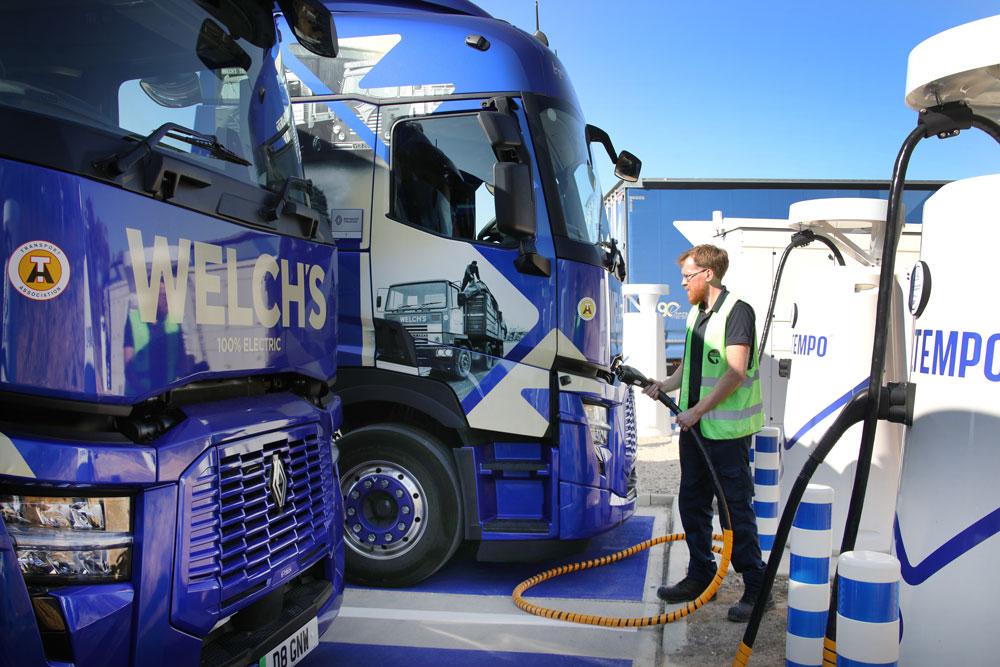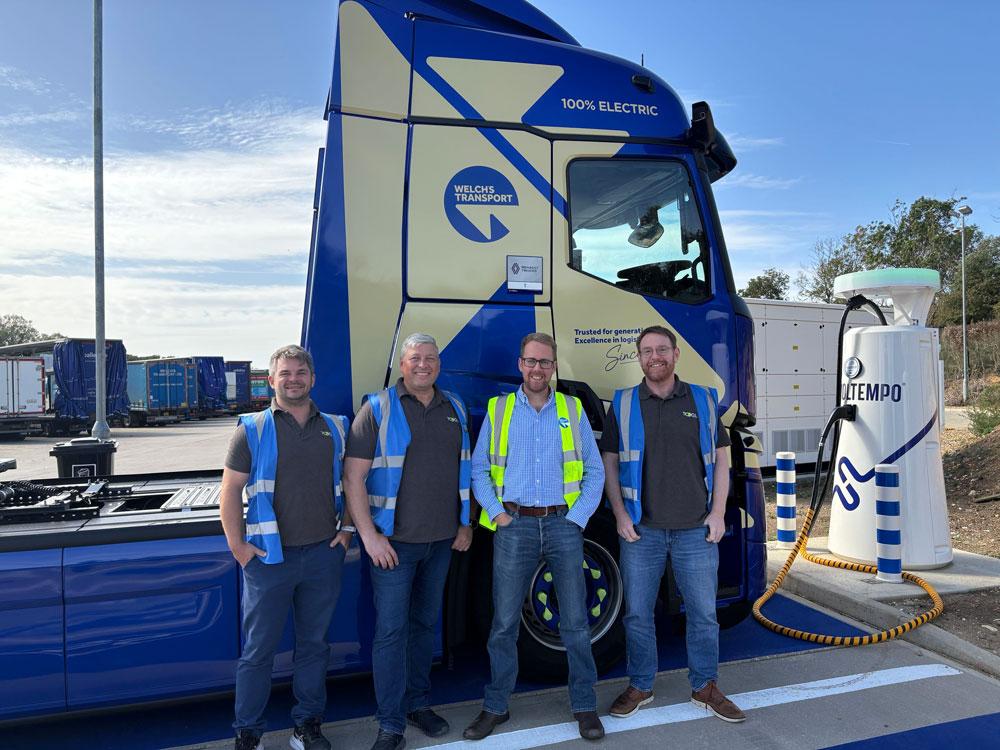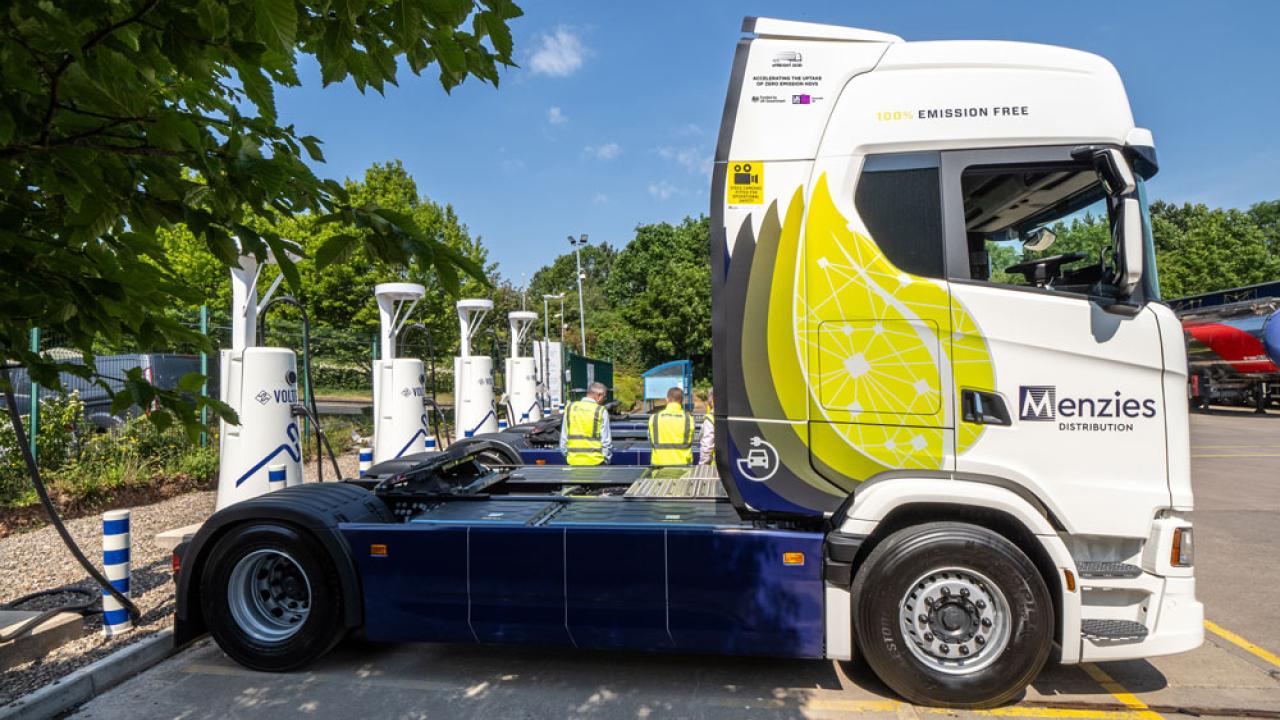
Menzies Distribution Solutions (MDS) has introduced three new 42-tonne Scania electric trucks through the eFREIGHT 2030 programme.
The vehicles are the first of 10 electric HGVs that MDS will deploy through the UK government funded Zero Emission HGV and Infrastructure demonstrator (ZEHID) programme.
Adam Purshall, Fleet, Program and Systems Director at MDS, said: “This is the next significant step in our decarbonisation strategy. We have been exploring alternative fuels such as Bio-CNG and HVO for some time, but these are the first battery-electric vehicles to join our fleet and represent our first major move towards electrification.
“We have been actively involved in eFREIGHT 2030 since joining the consortium around two years ago and seeing our first vehicles enter live operation is an important milestone. It enables us to build on the work already undertaken through the project by gathering real-world operational data and driver feedback that will help shape our future fleet decisions.”
The three Scania 4x2 45S high-roof battery-electric tractor units, which combine Scania’s S-series sleeper cab with a 450kW electric powertrain, are operating from MDS’s multi-user distribution centre in Wakefield, supporting retail and FMCG customers on local and regional delivery work.
They are initially being deployed on operations involving predominantly packaging and other relatively lightweight loads. The vehicles will be double-shifted across day and night operations and returned to base to recharge between shifts, with MDS investing in on-site infrastructure offering 1MW megawatt-charging capability. The trucks are expected to cover around 250 miles per shift and will be charged twice within each 24-hour operating cycle to maximise utilisation.
As eFREIGHT 2030 project lead and charging infrastructure partner, Voltempo has supported MDS throughout the planning and implementation of its charging infrastructure.
Purshall said: “Voltempo has helped us navigate a complex process, bringing specialist expertise around the technical requirements, grid connection and engagement with the Distribution Network Operator. Its team has been knowledgeable, responsive and collaborative throughout.”
Purshall added: “The new trucks will initially support local and regional deliveries from Wakefield, but over time we plan to move them between operations, assess a range of use cases and understand how far we can push the technology in live operations.”
The Scanias form part of a broader 10-vehicle electric HGV deployment planned by MDS through eFREIGHT 2030. The business has selected vehicles from Scania, DAF and Renault Trucks, enabling it to compare different vehicle technologies, operating characteristics and support models.
Purshall said: “Our decision to take vehicles from three manufacturers was very deliberate. We want to understand how they perform across different routes and duty cycles and generate the operational evidence needed to make informed decisions about future orders and the role battery-electric trucks can play within our fleet.”
He added that the government funding available through eFREIGHT 2030 had been “an important catalyst”, enabling the business to move forward with electric HGVs within a supported environment.
Telematics data from the vehicles will provide insights into mileage, duty cycles and energy use and will be shared with eFREIGHT 2030 and ZEHID technical evaluator, WSP. The anonymised findings will be aggregated with data from other consortium operators to build a wider evidence base around the performance of electric HGVs in live UK logistics operations.