Renewable fuels enable HGV operators to deliver major carbon savings immediately, without waiting for new vehicles or infrastructure. Yet not all renewable fuels deliver the same benefits, and not all claims are equally robust. Gloria Esposito, director of sustainable business at Zemo Partnership, explains how to make a genuine impact
The decarbonisation of the UK’s heavy goods vehicle (HGV) sector is entering a decisive phase. While electrification continues to dominate industry narratives, the operational realities of long-haul freight tells a more nuanced story. High payload requirements, long distances and tight delivery schedules make this one of the most difficult transport segments to decarbonise. In this context, renewable fuels are not a secondary option; they are a critical, immediate solution already delivering measurable impact across the UK.
Today, an estimated 12,000 HGVs are running on renewable alternatives such as hydrotreated vegetable oil (HVO), biomethane and high-blend biodiesel. This is not a pilot phase; it is a growing movement within the logistics sector, cutting greenhouse gas emissions and supporting decarbonisation goals.
Greenhouse gas savings
These fuels deliver lifecycle greenhouse gas savings of more than 85 per cent compared to conventional diesel when derived from waste-based feedstocks. That distinction is critical. The credibility of renewable fuels depends not just on the fuel itself, but on how it is produced and distributed to the end customers. Under robust assurance frameworks, these fuels are sourced from wastes and residues, ensuring emissions reductions are both significant and sustainable.
Long-haul trucking amplifies the benefits of fuel switching. Vehicles in this segment consume large volumes of fuel over extended distances, so even small reductions in carbon intensity have an outsized impact. Renewable fuels therefore offer one of the fastest and most effective ways to reduce emissions from existing assets. They enable operators to act immediately, without waiting for new vehicles or infrastructure. In a sector where margins are tight and operational continuity is critical, that ability to decarbonise without disruption is a powerful advantage.
The importance of traceability
HVO is widely recognised as a drop-in diesel replacement, but its environmental value depends entirely on its feedstock. When produced from waste-derived materials such as used cooking oil and animal by-products, it can achieve life cycle greenhouse gas savings in excess of 85 per cent. These waste-based inputs avoid the land-use concerns associated with crop-based fuels and ensure that the carbon reductions are genuine. Assurance frameworks such as the Renewable Fuels Assurance Scheme (RFAS) are critical for ensuring the traceability of waste-derived sources. For fleet operators, this provides confidence not only in performance, but in the integrity of the emissions savings being claimed.
Commercially, HVO offers a straightforward transition, requiring no vehicle modifications and enabling immediate deployment across existing fleets.
Biomethane provides a complementary route. Produced through the anaerobic digestion of organic waste, it captures methane that would otherwise be released into the atmosphere. Feedstocks include food waste, agricultural residues, slurry, manure and sewage sludge. The use of manure is particularly significant, preventing the release of a highly potent greenhouse gas while generating a renewable fuel. As a result, biomethane can, in some cases, deliver net-negative outcomes. It also offers potential cost advantages and greater fuel price stability, making it an attractive option for operators seeking both environmental and commercial benefits.
Together, these fuels deliver a rare alignment of environmental impact and operational practicality. They reduce emissions immediately while supporting cost control, energy resilience and continuity of service. For many fleets, they represent the most effective way to begin, and accelerate, the decarbonisation journey.
This immediacy is critical in the context of the UK’s net zero targets. Even with rapid progress in battery-electric technology, the transition of the HGV fleet will take time. Diesel vehicles entering service today may remain operational into the 2030s. Infrastructure constraints, grid capacity and cost considerations all point to a gradual transition rather than a sudden shift. Renewable fuels provide a bridge across this period, enabling emissions reductions now while longer term solutions develop.
At the same time, the economic realities of electrifying long-haul articulated HGV fleets remain challenging. Battery-electric trucks come with significantly higher upfront costs, often two to three times that of a diesel equivalent. For large fleets, this represents a substantial capital investment with uncertain short-term returns. Infrastructure adds further complexity. Depot charging requires high-capacity grid connections, which can involve long lead times and significant upgrades. The cost of installing chargers, redesigning depots and managing energy demand further increases this financial burden.
Operational challenges
Operational challenges compound the issue. Battery weight can reduce payload, affecting revenue on long-haul routes. Charging requirements can disrupt tightly optimised schedules, and public charging infrastructure for HGVs remains limited. For operators dependent on reliability and efficiency, these constraints are not minor; they are fundamental. While electrification will play a crucial long-term role, it is not yet a universal solution for all use cases.
This reinforces a key principle: there is no one-size-fits-all pathway to decarbonising heavy transport. Electrification, hydrogen and renewable fuels each have a role to play. The priority must be reducing well-to-wheel emissions as quickly and cost-effectively as possible, using every viable solution available.
Renewable fuels are central to this approach. They enable immediate emissions reductions across existing fleets, working in parallel with the gradual rollout of zero emission vehicles. Rather than waiting for a single, perfect solution, the industry can act now, cutting emissions today while continuing to invest in the technologies of tomorrow.
Independent assurance
As adoption grows, however, so does the need for transparency. Not all renewable fuels deliver the same benefits, and not all claims are equally robust. The sustainability of a fuel depends on feedstock origin and supply chain integrity. Without proper verification, there is a risk of overstated emissions savings and reduced trust.
This is where RFAS plays a vital role. By providing independent assurance, it ensures that renewable fuels meet strict sustainability criteria and are derived from traceable, waste-based feedstocks. It validates greenhouse gas savings claims and provides full transparency across the supply chain. In doing so, it gives fleet operators and their customers confidence that emissions reductions are real and defensible.
The development of RFAS Fleet extends this value further, particularly in the context of Scope 3 reporting. Transport emissions often represent a significant portion of a company’s indirect footprint, yet they have historically been difficult to measure accurately. RFAS Fleet enables verified GHG emissions savings to be allocated to specific transport activities, providing robust data that can be used in corporate reporting. This has important commercial implications. Operators using RFAS-assured fuels can offer verifiable low carbon transport, supporting customers’ sustainability goals and strengthening their own market position. At the same time, they reduce exposure to the risks associated with unverified environmental claims.
None of this diminishes the importance of electrification. Zero emission vehicles will be essential to achieving long-term climate goals. But the scale and cost of the transition, particularly for long-haul operations, mean it will take time. During that time, emissions must continue to fall.
As the UK moves forward, the focus must be on deploying solutions that deliver immediate impact. Renewable fuels, derived from waste and delivering life-cycle greenhouse gas savings of over 85 per cent, are among the most effective tools available today. When supported by robust assurance through RFAS, they provide a credible and scalable pathway to decarbonisation.
Ultimately, the goal is not to champion a single technology, but to reduce emissions as quickly and cost-effectively as possible. In long-haul freight, that means recognising the complementary role of renewable fuels alongside electrification. By combining immediate action with long-term ambition, the sector can make real progress - cutting emissions now while building towards a zero emission future.
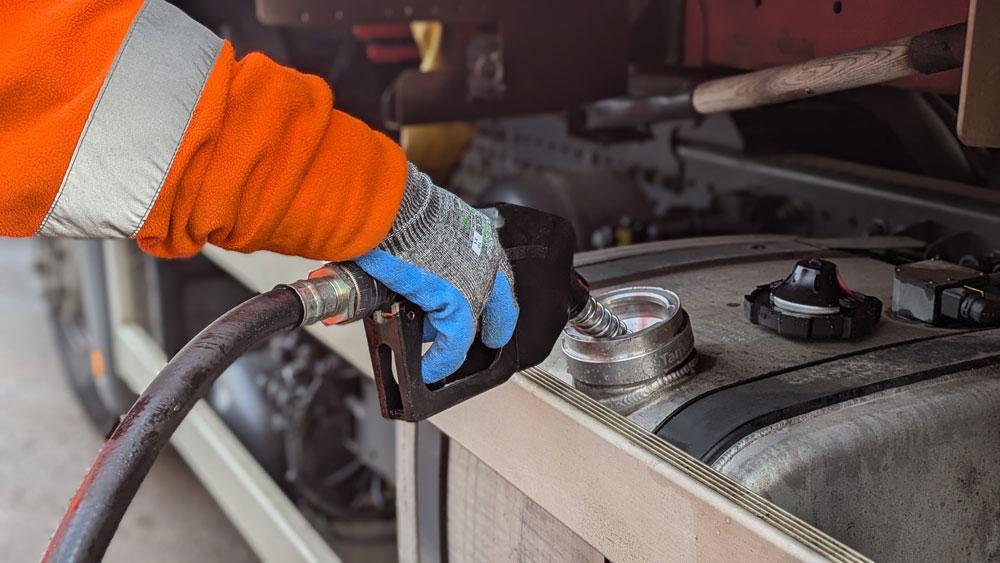
Image shows a Biffa Wasteater being refuelled with HVO.