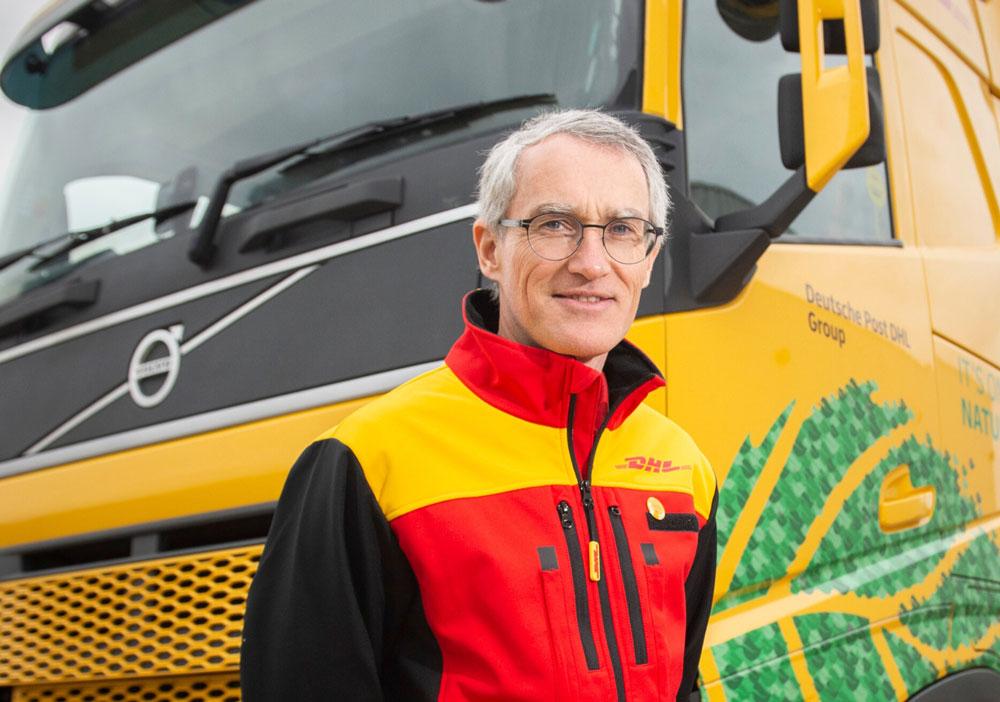
Gavin Murdoch, MD for network transport solutions at DHL Supply Chain UK & Ireland, outlines how the company is combining transport management technology, alternative fuels and fleet electrification to improve efficiency, strengthen operational resilience and reduce emissions across its transport network
For many businesses, the journey to net zero transport is well underway but the current operating environment remains defined by a series of pressures. Rising fuel costs, fluctuating delivery volumes and an increasingly complex regulatory landscape have made fleet optimisation more than just a cost-saving or efficiency-driving exercise. Instead, it’s now a matter of operational resilience. While the transition to net zero is a key goal, the journey towards a greener fleet is also intertwined with how we alleviate the day-to-day pressures on our transport networks.
Optimisation as the foundation of sustainability
While much of the discussion around decarbonisation naturally centres on alternative fuels, the first step for any transport network to drive down emissions is to optimise efficiency. In an era of volatility, the most effective way to alleviate transport pressure is to ensure that the existing network is performing at its absolute limit. Burning less fuel, running fewer empty miles and mapping smarter routes all contribute to emissions reduction, and technology is already delivering measurable results in this space.
Transport Management Systems (TMS) sit at the heart of modern fleet operations, enabling operators to allocate fleet and optimise routing and scheduling in ways that were simply not possible a decade ago. Combined with fleet management, tachograph management and carrier performance tools, these systems give operators real-time visibility to make better decisions on cost, service and carbon savings.
At DHL, we’re evolving our TMS landscape, standardising and simplifying our tools, which aids scalability across the business and helps to drive productivity gains. As these tools mature, and the use cases for Agentic AI become realised, the opportunity to use them in real-time becomes genuinely exciting and unlocks new time, cost and fuel saving capabilities.
However, technology only completes the picture when it also empowers the human element of our networks. From digital walk-round checks to sign-on-glass proof-of-delivery, drivers’ days are increasingly digitised. This reduces the administrative burden and improves compliance, but it also provides the granular performance data that drives continuous improvement, such as fuel consumption per mile.
Strategic decarbonisation
Once a network is optimised to “burn less,” the focus shifts to “burning clean.” Ultimately, businesses are working towards the goal of a zero emission fleet but the transition to this requires a practical, blended approach.
The reality for heavy-duty operations remains challenging. While EV technology is progressing and electric van adoption has grown steadily, the limitations regarding range and the availability of public charging infrastructure for HGVs are still significant hurdles. To achieve meaningful emissions reduction in the present and short-term, the sector must leverage bridging technologies that offer immediate impact.
As a drop-in fuel, Hydrotreated Vegetable Oil (HVO) has become a cornerstone of the green fleet transition. It allows operators to cut carbon emissions by up to 90 per cent without the need for new infrastructure or fleet replacement. At the same time, bio-LNG and bio-CNG gas trucks remain a key intermediate technology for long-haul distribution, providing a proven, commercially viable alternative to diesel that delivers up to an 80 per cent reduction in emissions.
By adopting a multi-fuel strategy, businesses can avoid the trap of coming to a standstill in their decarbonisation journey, waiting for a perfect public charging network or better availability of electric HGVs. Diversifying fuels creates resilience in transport networks, delivering immediate carbon savings and also ensuring the network remains functional if one energy source is under pressure.
Keeping up momentum on electrification
While gas and HVO have a key role to play, the strategic electrification of fleets remains a core focus for long-term decarbonisation, offering a viable, zero emission alternative to traditional diesel vehicles.
At DHL, we have been driving this forward, introducing Volvo fully electric 40-tonne trucks into our operation in 2023 following our 16-tonne launch in 2022. These vehicles, with a range of up to 300km, are already proving their worth on full round-trips for retail and automotive customers.
To support this, we are investing heavily in our own charging infrastructure, with much of this powered by renewable energy generated on-site at facilities like our BREEAM “Outstanding” Coventry hub.
Transparency and the value of partnership
As businesses navigate the transition to zero emission transport networks, the requirement for transparency has moved from a “nice-to-have” to a commercial necessity. Customers and stakeholders now want to see detailed, data-backed reporting, while simultaneously keeping costs down.
This is where the value of a third-party logistics partner like DHL becomes clear. The investment required for alternative fuel fleets and the complexity of managing multi-fuel infrastructure represent major barriers for many businesses. By partnering with an operator that has already invested in scaling the right technology and infrastructure, businesses can drive down their Scope 3 emissions while avoiding major barriers and complexity.
The road to resilience
Ultimately, building a sustainable and optimised transport network depends on the strategic coordination of transparency, emissions reduction and integration. This journey begins with the use of data to pinpoint exactly where a network is under strain, followed by a “burn less, burn clean” philosophy that prioritises route efficiency before transitioning to alternative fuels. By ensuring that these new technologies and energy sources are integrated into a scalable infrastructure rather than treated as isolated additions, fleet operators can create a resilient operation that is prepared for both future growth and the long-term road to net zero.